
Best Travel Routers for Airbnb & Hotel Wi-Fi (2026)

Disclosure: inventgo may earn a commission if you buy through links on this page, at no extra cost to you. Learn more.
On this page
Every rental has its own Wi-Fi quirks. The password is on a fridge magnet, the router is tucked away in a cupboard at the far end of the flat, and the TV wants you to sign in again. Then there's the question nobody likes to ask: who else is on this network?
A travel router solves most of this. It connects to the host's Wi-Fi (or an Ethernet port, or your phone) and creates your own private network. Your laptop, phone, tablet, streaming stick and the kids' devices see the same network name and password at every stay, so only the router has to log in to each new place. Add the built-in VPN and everything behind it is encrypted, including devices that can't run a VPN app.
Below, we compare four GL.iNet travel routers using the figures GL.iNet publishes.
Comparison table
| GL.iNet Beryl AX (GL-MT3000) ★ | GL.iNet Slate 7 (GL-BE3600) | GL.iNet Opal (GL-SFT1200) | GL.iNet Mudi 7 (GL-E5800) | |
|---|---|---|---|---|
| Role | Pocket Wi-Fi 6 travel router | Wi-Fi 7 travel router with touchscreen | Budget pocket router | 5G mobile router with battery |
| Wi-Fi standard | Wi-Fi 6 (802.11ax) | Wi-Fi 7 (802.11be), dual-band | Wi-Fi 5 (802.11ac) | Wi-Fi 7, tri-band (2.4/5/6GHz) |
| Max Wi-Fi speed (GL.iNet) | 574 Mbps + 2402 Mbps | 688 Mbps + 2882 Mbps | 300 Mbps + 867 Mbps | 688 + 2882 + 5764 Mbps |
| WireGuard / OpenVPN (client, GL.iNet tests) | 300 / 150 Mbps | 490 / 385 Mbps (OpenVPN DCO) | 65 Mbps WireGuard | 600+ / 700+ Mbps (OpenVPN-DCO) |
| Ethernet | 1 × 2.5G WAN, 1 × 1G LAN | 1 × 2.5G WAN, 1 × 2.5G LAN | 1 × WAN, 2 × LAN (gigabit) | 1 × 2.5G WAN/LAN |
| Cellular | No | No | No | 5G NR, onboard eSIM, 2 × nano-SIM |
| Power | USB-C, 5V/3A | USB-C PD (5V/3A, 9V/3A, 12V/2.5A) | USB-C, 5V/3A | 5150 mAh battery; USB PD/PPS, 30W max |
| Size / weight (GL.iNet) | 120 × 83 × 34 mm / 196 g | 130 × 91 × 34 mm / 295 g | 118 × 85 × 30 mm / 145 g | 157 × 75 × 22.8 mm / 300 g |
| Price | Check current price | Check current price | Check current price | Check current price |
Specs drawn from GL.iNet's Beryl AX, Slate 7, Opal and Mudi 7 product pages, checked 17 Oct 2026. GL.iNet notes that its VPN results are client-mode tests on a local network and that real-world speeds may differ. The Mudi 7 comes in North American (GL-E5800NA) and European (GL-E5800EU) versions with different 5G bands. GL.iNet may update its specs, so confirm on gl-inet.com before you buy.
GL.iNet Beryl AX (GL-MT3000): the Airbnb all-rounder
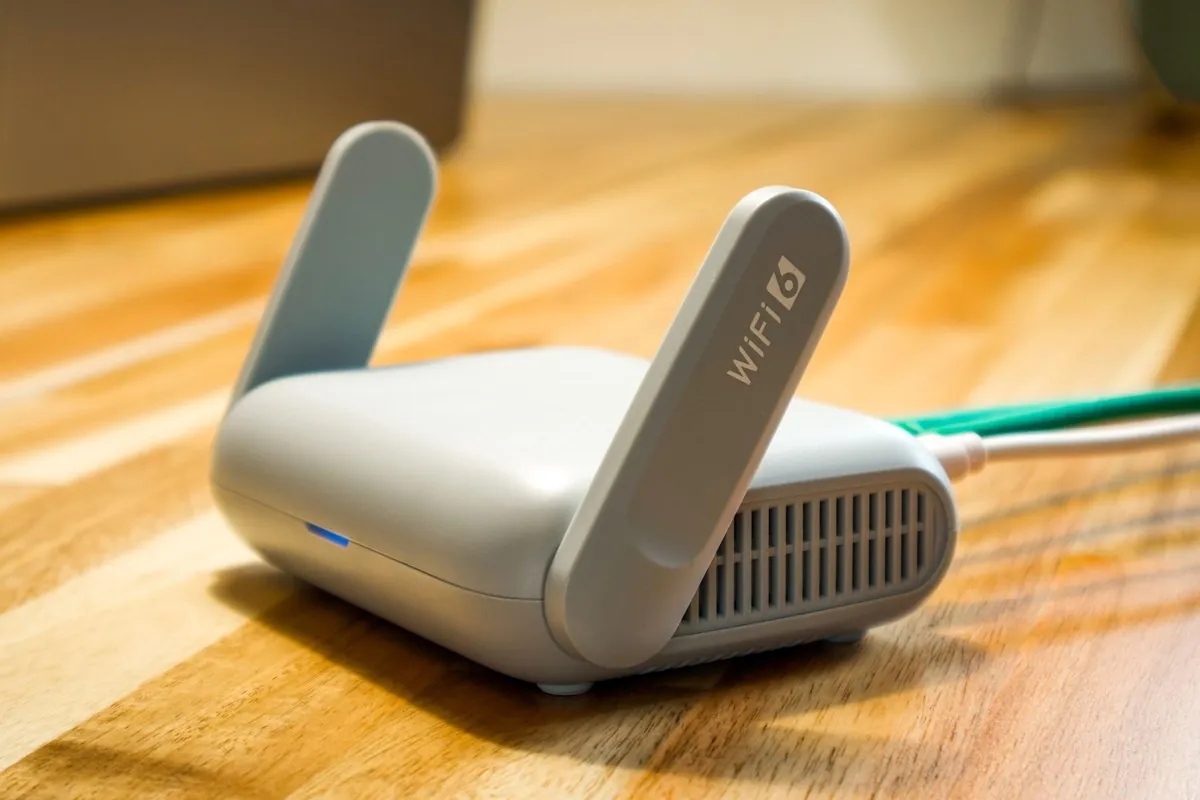
GL.iNet Beryl AX (GL-MT3000)
- Wi-Fi 6: 574 Mbps (2.4GHz) + 2402 Mbps (5GHz)
- WireGuard up to 300 Mbps
- 120 × 83 × 34 mm / 196 g
Best for: Most Airbnb and home-stay guests who want one private, VPN-ready network for every device
Check priceThe Beryl AX is where most rental guests should start. GL.iNet lists Wi-Fi 6 speeds of up to 574 Mbps (2.4GHz) and 2402 Mbps (5GHz), a MediaTek MT7981B 1.3GHz dual-core processor, 512MB DDR4 memory and support for 70+ devices. It weighs 196 g and measures 120 × 83 × 34 mm.
For a home-stay, the practical details matter most. It runs on USB-C (5V/3A) and uses under 8 W, so you can power it from a laptop charger or a power bank. It has a 2.5G WAN port if the flat has a wired socket, two retractable antennas and a USB 3.0 port. OpenVPN and WireGuard come pre-installed and work with 30+ VPN services. GL.iNet measured up to 300 Mbps on WireGuard and 150 Mbps on OpenVPN. It also supports WPA3, DNS over HTTPS/TLS and AdGuard Home.
Pros
- One private network for every device, at every stay
- WireGuard VPN fast enough for most rental broadband
- Small, light and powered over USB-C
Cons
- Wi-Fi 6 rather than Wi-Fi 7
- Gets its internet from the host's Wi-Fi or Ethernet (no SIM slot)
Who it's for: most Airbnb and home-stay guests, from couples to families with a bag of devices.
GL.iNet Slate 7 (GL-BE3600): Wi-Fi 7 with a touchscreen
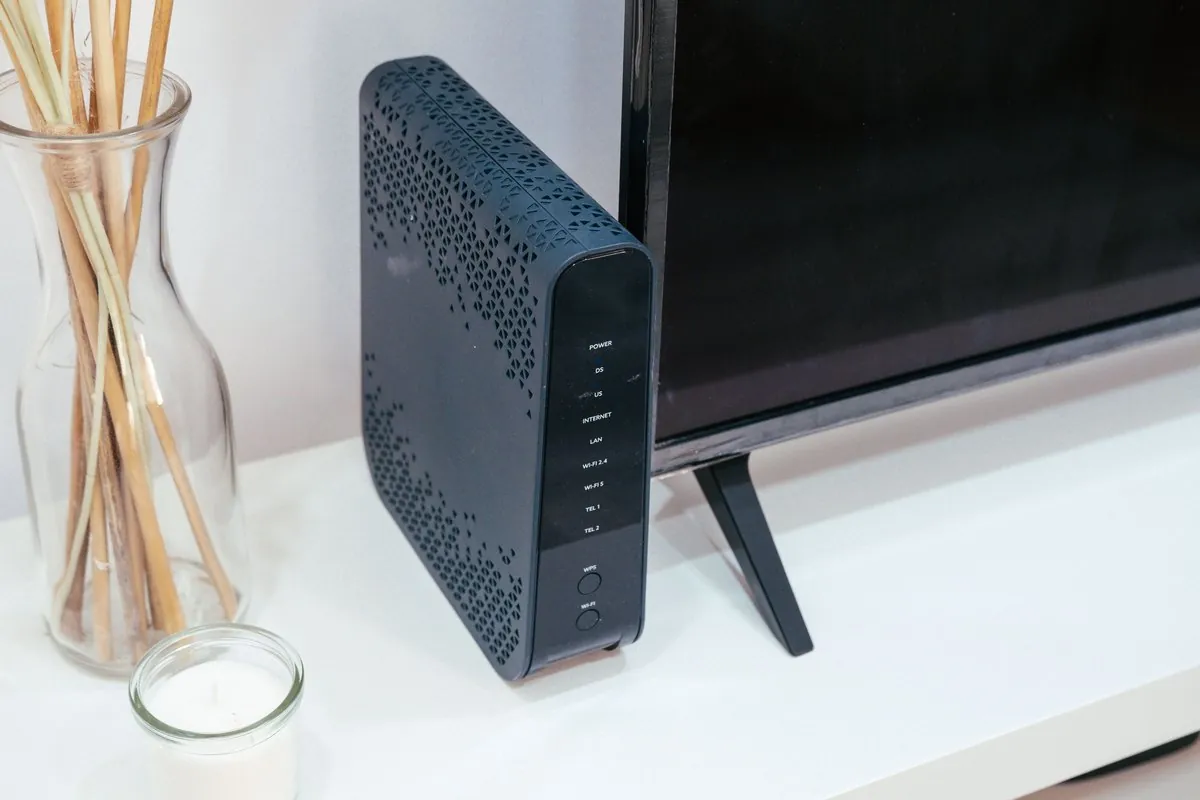
GL.iNet Slate 7 (GL-BE3600)
- Wi-Fi 7: 688 Mbps (2.4GHz) + 2882 Mbps (5GHz)
- WireGuard up to 490 Mbps
- 130 × 91 × 34 mm / 295 g
Best for: Remote workers and families who want Wi-Fi 7, faster VPN and a touchscreen
Check priceThe Slate 7 is GL.iNet's first dual-band Wi-Fi 7 travel router. It's rated at up to 688 Mbps (2.4GHz) and 2882 Mbps (5GHz) and can connect 120+ devices. It runs on a Qualcomm quad-core 1.1GHz chip with 1GB DDR4 memory. It has two 2.5G Ethernet ports (WAN and LAN), and GL.iNet quotes up to 490 Mbps on WireGuard and 385 Mbps on OpenVPN DCO.
The touchscreen is what makes it especially handy in rentals. GL.iNet says you can use it to scan QR codes for quick Wi-Fi connections, check speeds, switch VPNs on and off, and see which connection mode is active (Ethernet, Tethering, Repeater or Cellular). GL.iNet also lists captive-portal handling for hotel-style login pages and multi-WAN failover. Power is USB-C PD (5V/3A, 9V/3A or 12V/2.5A) with a lightweight adapter. It measures 130 × 91 × 34 mm and weighs 295 g.
Pros
- Fastest Wi-Fi and VPN figures of the non-cellular picks
- Touchscreen makes setup in a new rental quicker
- Dual 2.5G ports for wired sockets or a laptop
Cons
- About 100 g heavier than the Beryl AX
- Draws up to 18 W (without USB), so it needs a stronger power source than the Beryl AX
Who it's for: remote workers on long stays, and families streaming on several screens at once.
GL.iNet Opal (GL-SFT1200): the budget pocket router
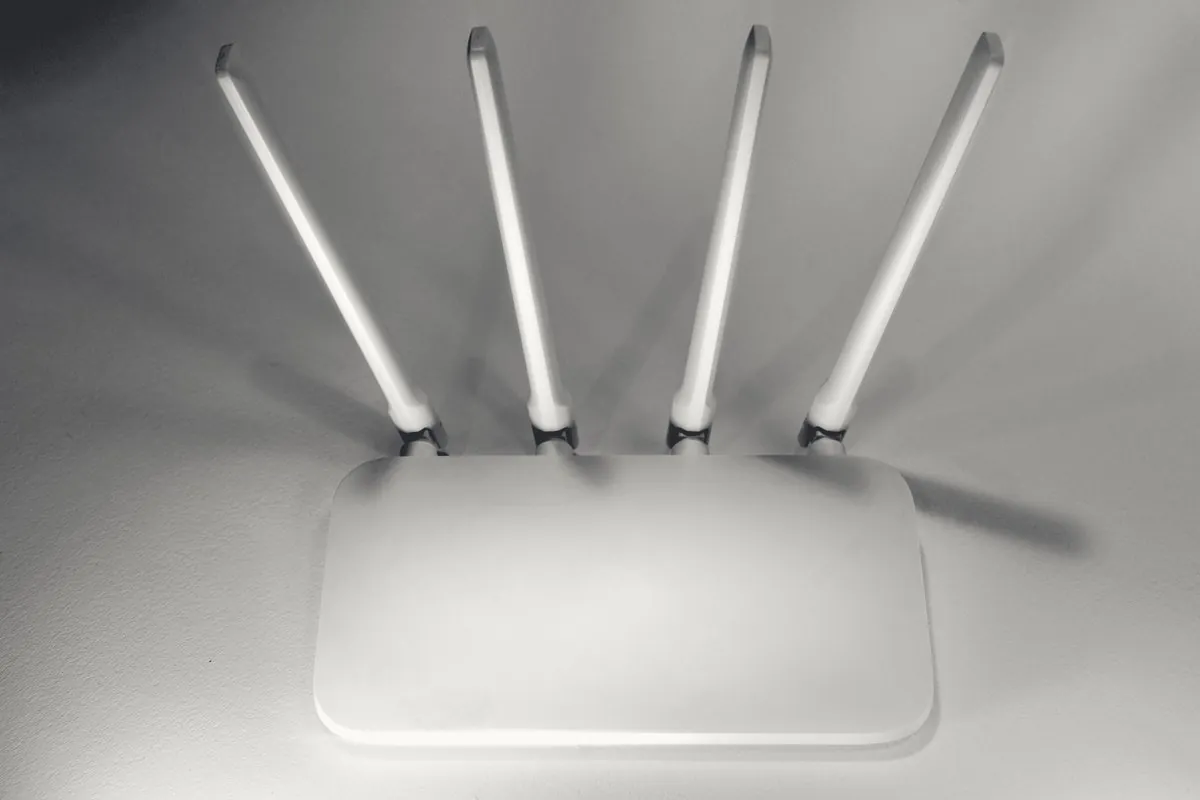
GL.iNet Opal (GL-SFT1200)
- Wi-Fi 5: 300 Mbps (2.4GHz) + 867 Mbps (5GHz)
- WireGuard up to 65 Mbps
- 118 × 85 × 30 mm / 145 g
Best for: Couples and light users who mainly want one network name and basic VPN
Check priceThe Opal is the lightest pick here at 145 g (118 × 85 × 30 mm). It offers Wi-Fi 5 at up to 300 Mbps (2.4GHz) and 867 Mbps (5GHz), three gigabit Ethernet ports (1 WAN, 2 LAN), up to 52 wireless devices and USB-C (5V/3A) power. GL.iNet says it can get online in four ways: cable, repeater, USB 3G/4G modem and tethering. OpenVPN and WireGuard are built in, along with Cloudflare DNS over TLS.
The trade-off is VPN speed: GL.iNet's own WireGuard figure is up to 65 Mbps, far below the Beryl AX. That's enough for browsing and HD streaming on typical rental Wi-Fi, but it will hold back a fast fibre line.
Pros
- Lightest and smallest pick
- Covers the basics: private network, VPN and DNS encryption
- Two LAN ports for a laptop or streaming box
Cons
- Wi-Fi 5 only
- Much slower VPN than the Beryl AX or Slate 7
Who it's for: couples and light users who mainly want one trusted network and occasional VPN.
GL.iNet Mudi 7 (GL-E5800): 5G backup for bad host Wi-Fi
GL.iNet Mudi 7 (GL-E5800)
- 5G NR + tri-band Wi-Fi 7
- Onboard eSIM + 2 nano-SIM slots
- 5150 mAh battery
Best for: Stays with weak or no Wi-Fi, where you need 5G and a battery
Check priceSometimes the problem isn't security: the host's Wi-Fi is slow or keeps dropping, or the cabin has none at all. The Mudi 7 is a 5G NR router (GL.iNet quotes up to 4.67 Gbps). It has tri-band Wi-Fi 7 (688 / 2882 / 5764 Mbps), an onboard eSIM, two nano-SIM slots with dual-SIM dual-standby, a 2.5G Ethernet port and a 2.8" touchscreen. It can also repeat the host's Wi-Fi. Its 5150 mAh (19.83 Wh) battery is rated by GL.iNet for up to 13.5 hours and charges at 24W PD. GL.iNet lists VPN speeds of 700+ Mbps on OpenVPN-DCO and 600+ Mbps on WireGuard.
Data for the Mudi 7: you'll need a data plan for its eSIM or SIM slots. A travel eSIM such as Airalo is one option, but eSIM support varies by device, so check with the provider that its plan works in a router before you buy.
It measures 157 × 75 × 22.8 mm and weighs 300 g. There are separate NA and EU versions with different 5G and LTE bands, so check which one covers your destinations, and confirm that your carrier supports the device.
Pros
- Works when the host's Wi-Fi doesn't
- Battery means no hunting for a socket next to the window
- eSIM and dual SIM for switching networks
Cons
- By far the most expensive pick
- Regional versions and carrier support need checking
- You still need a data plan
Who it's for: remote workers who can't afford a dead connection, and anyone renting rural cabins or villas.
How to choose a travel router for Airbnb and home-stays

- Start with how you get online. If the rental has Wi-Fi or an Ethernet socket, a Wi-Fi router (Beryl AX, Slate 7 or Opal) is enough. If the Wi-Fi is often weak or missing, look at a cellular router like the Mudi 7.
- Match VPN speed to the connection. Use GL.iNet's figures as a ceiling, not a promise. The Opal's 65 Mbps WireGuard figure is fine for typical rental Wi-Fi; for fast fibre, choose the Beryl AX or Slate 7.
- Count your devices. GL.iNet quotes 52 devices for the Opal, 70+ for the Beryl AX and 120+ for the Slate 7. A family with TVs, tablets and consoles should skip the Opal.
- Think about power. The Beryl AX and Opal run on 5V/3A USB-C. The Slate 7 supports higher-voltage PD input, and the Mudi 7 has its own battery. A good GaN charger or power bank can power most of them.
- Keep phone data as a backup. If the host's Wi-Fi fails, a phone running a travel eSIM such as Airalo can share its connection with a router that supports USB tethering (the Slate 7, Opal and Mudi 7 all list it), so your devices stay on the same network.
- Respect the house rules. A travel router connects to the host's network like any other device. Don't use it to bypass the listing's rules, and check local laws if you plan to use a VPN.
Conclusion
For most Airbnb and home-stay trips, the GL.iNet Beryl AX (GL-MT3000) is the one to pack: Wi-Fi 6, a fast WireGuard VPN, 196 g and USB-C power. Choose the Slate 7 for Wi-Fi 7, the touchscreen and more VPN speed. The Opal is the budget option, and the Mudi 7 is for stays where you can't rely on the host's Wi-Fi at all. Check the latest specs and regional versions on GL.iNet's site, then sort your eSIM and insurance before you go.
Check today's options: Beryl AX · Slate 7 · Opal · Mudi 7
FAQ
Do I need a travel router for an Airbnb?
No, but it helps if you travel with several devices or stay in lots of places. Each device connects to your router once. After that, only the router has to join each new network.
Is a travel router safer than using the host's Wi-Fi directly?
It adds layers: your devices sit on your own network, and the built-in VPN can encrypt all of their traffic. It isn't a guarantee, though, so keep devices updated and use strong passwords.
Can a travel router find hidden cameras?
No. A router isn't a camera detector, and nothing on this page should be treated as one. Detection gadgets and phone scans aren't guaranteed to find every device either. Airbnb's own security camera policy says that since 30 April 2024, hosts may not have security cameras or recording devices that monitor any indoor space, even if they're switched off, and that hidden cameras are strictly prohibited. Exterior cameras are allowed only if disclosed, and some listings in Japan with a Hotel Business License are an exception. If you find a device that worries you, contact Airbnb and, where appropriate, local authorities. Other platforms and local laws have their own rules.
Will a travel router work with Wi-Fi that has a login page?
GL.iNet lists captive-portal handling for the Slate 7. In practice, some login pages need you to sign in through the router once before the rest of your devices can connect.
What else should I sort before the trip?
Get data sorted for when you land with a travel eSIM. For long stays and multi-country trips, consider SafetyWing or another travel insurance plan that covers your gadgets if they're lost or stolen.

 Travel Tech
