
Best USB-C Rechargeable AA Batteries for Backpackers: Stop Buying Disposables on the Road

Disclosure: inventgo may earn a commission if you buy through links on this page, at no extra cost to you. Learn more.
On this page
Comparison table
| Spec | Paleblue Voyager AA ★ | Paleblue AA USB-C | EBL 3500mWh AA | Paleblue AAA USB-C |
|---|---|---|---|---|
| Size | AA | AA | AA | AAA |
| Energy | 3,300 mWh | 2,550 mWh (1,700 mAh) | 3,500 mWh | 900 mWh (600 mAh) |
| Voltage | 1.5V nominal, gradual drop | Constant 1.5V | 1.5V | Constant 1.5V |
| Full charge | About 2.1 hours | About 90 minutes | About 2 hours | About 60 minutes |
| Rated cycles | 1,000+ | 1,000+ | 1,600+ | 1,000+ |
| Charging | USB-C, cable included | USB-A to 4x USB-C cable | USB-A to 4x USB-C cable | USB-A to 4x USB-C cable |
| Link | Check current price | Check current price | Check current price | Check current price |
Specs are from the Paleblue and EBL official product pages, checked 27 Oct 2026. Charge times depend on the USB power source.
Plenty of backpacking gear still runs on AA or AAA cells: headlamps, camera flashes, GPS units, travel clocks, game controllers and the remote in your homestay. Buying disposables in every town adds weight, cost and waste, and good batteries can be hard to find in remote villages. USB-C rechargeable cells solve that. Each battery has its own charging port, so you charge it from the same power bank or wall plug as your phone. There's no separate charger to carry.
Paleblue Voyager AA: the best overall
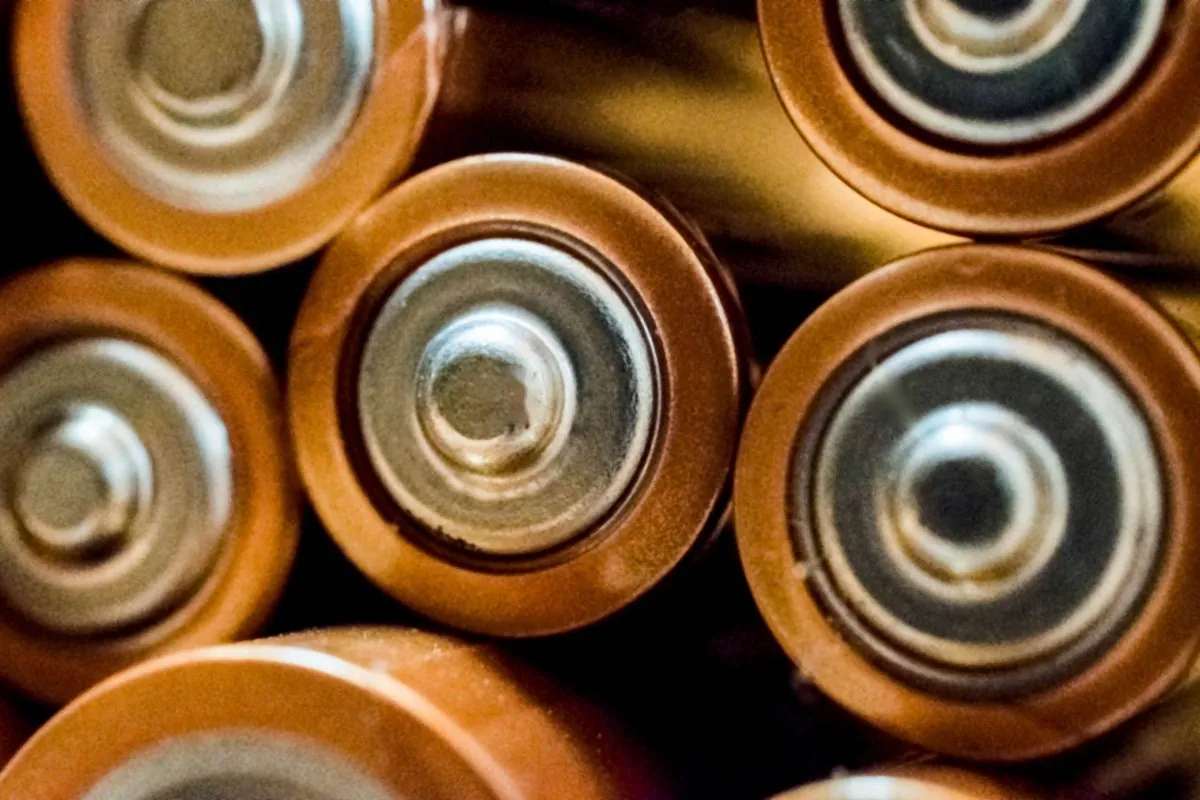
Paleblue Voyager AA USB-C Rechargeable Batteries
- 3,300 mWh; 1.5V nominal (1.0-1.6V)
- Full charge in about 2.1 hours over USB-C
- 1,000+ recharges; 17.5 g per cell
Best for: Backpackers who want one AA set for headlamps, remotes and gadgets with working low-battery warnings
Check priceThe Paleblue Voyager AA is Paleblue's new AA. What sets it apart is how it runs down. Paleblue says most lithium rechargeables hold a flat 1.5V until they suddenly die, so a device's low-battery warning often never appears. It says Voyager is engineered to discharge more like an alkaline: voltage softens gradually as capacity is used, then drops at the very end so devices can warn you first. That's handy when you'd like a heads-up before your headlamp needs fresh cells.
The numbers are good too. Paleblue lists 3,300 mWh, a nominal 1.5V (1.0-1.6V), 1,000+ recharges, a full charge in about 2.1 hours (80% in 94 minutes) over USB-C, and 17.5 g per cell. Built-in protection covers over- and under-temperature, over- and under-voltage and short circuits. Every pack comes with charging cables and travel cases that Paleblue says are made from GRS-certified post-consumer recycled plastic.
Pros
- Gradual discharge, so low-battery indicators work
- High listed capacity for a USB AA
- Travel cases included
Cons
- Paleblue lists an operating range of 10-45°C, so it's less suited to freezing alpine nights
- Slower to charge than the classic Paleblue AA
Who it's for: backpackers who want one dependable AA set for headlamps, cameras and gadgets.
Paleblue AA USB-C: the fast-charging classic
Paleblue AA USB-C Rechargeable Batteries
- 1,700 mAh / 2,550 mWh; constant 1.5V
- About 90-minute charge
- 1,000+ cycles; USB-A to 4x USB-C cable included
Best for: Quick top-ups between bus rides and hostel nights
Check priceThe original Paleblue AA USB-C charges faster. Paleblue quotes a 90-minute charge, 1,700 mAh (2,550 mWh), constant 1.5V output and 1,000+ cycles. A single USB-A to four USB-C cable charges a set of four at once, and an LED on each cell shows when it's full. It also gets the same recycled-plastic travel cases.
The constant voltage keeps headlamps bright right to the end. The trade-off is the flat curve: your gear may not warn you before the cells are empty, so carry a spare pair.
Pros
- About 90 minutes to full
- Steady brightness in lights
- One cable charges four cells
Cons
- Less energy than the Voyager or EBL
- Little warning before the cells run out
Who it's for: travellers who charge often and want cells ready fast between buses, trains and hostel stops.
EBL 3500mWh AA: the highest listed capacity
EBL Rechargeable Lithium AA Batteries 3500mWh (4 Pack)
- 3,500 mWh; 1.5V lithium
- Full charge in about 2 hours over USB-C
- 1,600+ charge cycles; 4-in-1 USB-A to USB-C cable
Best for: High-drain gear like cameras, flashlights and game controllers
Check priceThe EBL Rechargeable Lithium AA 3500mWh has the highest listed energy here, at 3,500 mWh. EBL says all four cells charge in about 2 hours with the included 4-in-1 USB-A to USB-C cable, are rated for 1,600+ charge cycles, and have low self-discharge, so they hold charge in storage. A protection chip guards against overcharge, over-discharge and short circuits.
Pros
- Most listed energy of our AA picks
- Highest rated cycle count
- Low self-discharge for gear you use rarely
Cons
- EBL doesn't publish a cell weight or operating temperature on the product page
- Sold as a 4-pack only
Who it's for: backpackers running power-hungry AA gear, like cameras, flashlights or controllers.
Paleblue AAA USB-C: the best AAA option
Paleblue AAA USB-C Rechargeable Batteries
- 600 mAh / 900 mWh; constant 1.5V
- About 60-minute charge
- 1,000+ cycles; USB-A to 4x USB-C cable included
Best for: AAA headlamps, trail lights and small travel gadgets
Check priceMany compact headlamps and trail lights take AAA cells, including ones like the Petzl Actik Core in our rechargeable headlamp guide, which also runs on three AAAs. The Paleblue AAA USB-C gives 600 mAh (900 mWh), constant 1.5V, 1,000+ cycles and a charge in about 60 minutes, with the same four-way cable and LED indicator.
Pros
- About an hour to full
- Same cable as the Paleblue AA, so one cable covers both sizes
Cons
- Small capacity, as with any AAA
- Flat voltage curve, so little low-battery warning
Who it's for: anyone with AAA headlamps, mini lights or small electronics.
How to choose USB-C rechargeable batteries

- Check the energy rating, not just mAh. USB lithium cells list mWh, which is the fairer comparison. NiMH cells are 1.2V, so their mAh figures aren't directly comparable.
- Think about the voltage curve. Constant 1.5V keeps lights bright until the end. If you rely on low-battery warnings, the Voyager's gradual discharge suits you better.
- Count your cables. A one-to-four cable charges a full set from one USB port. Bring a power bank with a USB-A port, or a small USB-C to USB-A adapter.
- Watch the temperature. Paleblue lists 10-45°C operation for the Voyager. On cold treks, keep spare cells in an inside pocket.
- Flying with them: these are lithium-ion cells. The FAA says spare lithium batteries must go in carry-on bags only, with the terminals protected from short circuits. The included cases help. Our guide on flying with power banks explains how battery rules usually work, and other countries' rules can differ.
- Pair it with connectivity and cover. Charged batteries keep your headlamp going, and a travel eSIM keeps your maps working. Compare Airalo and others in our best travel eSIM guide. For longer trips, SafetyWing is one of the insurers in our travel insurance guide for nomads.
Our verdict
The Paleblue Voyager AA is our pick for most backpackers: 3,300 mWh, USB-C charging, 1,000+ recharges and a discharge curve Paleblue says lets low-battery warnings work. Pick the Paleblue AA USB-C if you want the fastest charge, the EBL 3500mWh AA for the most listed capacity and cycles, or the Paleblue AAA USB-C for AAA headlamps.
Shop rechargeable batteries: Paleblue Voyager AA · Paleblue AA USB-C · EBL 3500mWh AA · Paleblue AAA USB-C
FAQ
Can I charge USB-C AA batteries from a power bank?
Yes. All four picks charge over USB, so a power bank, laptop or phone wall charger works. The Paleblue AA, Paleblue AAA and EBL cables plug into a USB-A port.
Are USB-C AA batteries better than NiMH rechargeables?
They're different. USB lithium cells give 1.5V like alkalines and need no separate charger. NiMH cells run at 1.2V and need a dedicated charger, which is one more thing to pack.
How many disposable batteries do they replace?
Paleblue says each cell can be recharged 1,000+ times and replaces hundreds of single-use batteries over its life. EBL rates its AA cells for 1,600+ cycles. Real life depends on how you use and store them.
Will they work in every device?
Most AA and AAA devices are fine, but some show the wrong battery level with flat-voltage lithium cells. Check your device's manual if you're unsure.
Can I take them in checked luggage?
Spare lithium batteries belong in your carry-on. The FAA says spares must stay in the cabin with the terminals protected, and many other regulators and airlines follow similar rules.

 Eco Gadgets

