
Best Portable Power Station for Airbnb and Cabin Stays

Disclosure: inventgo may earn a commission if you buy through links on this page, at no extra cost to you. Learn more.
On this page
Comparison table
| Anker SOLIX C1000 Gen 2 ★ | Anker SOLIX C300 DC | EcoFlow RIVER 3 | |
|---|---|---|---|
| Capacity | 1,024Wh | 288Wh | 245Wh |
| Battery chemistry | LiFePO4 | LiFePO4 | LiFePO4 |
| Continuous output | 2,000W (3,000W peak) | 300W | 300W AC |
| AC sockets | Yes | No (DC/USB only) | Yes |
| Max solar input | 600W | 100W | 110W |
| UPS switchover | Under 10 ms | Not listed | Under 20 ms |
| Weight | Approx. 11.3 kg | Approx. 2.8 kg | Approx. 3.55 kg |
| Link | Check current price | Check current price | Check current price |
Specs are from the Anker SOLIX and EcoFlow official product pages, checked 29 Oct 2026.
Booking a cabin, farm stay or off-grid home rental is part of the appeal of Airbnb-style travel. Power cuts, weak sockets and a long drive between towns are part of it too. A portable power station is a big rechargeable battery with sockets and USB ports. Pair it with a folding solar panel and you can top it up from the sun instead of the grid. All three picks use LiFePO4 (lithium iron phosphate) batteries, which are built for many charge cycles. These are road-trip and drive-to-the-rental gadgets. At 245Wh to 1,024Wh, all three are well above the 160Wh maximum the FAA allows passengers to carry even with airline approval, so they can't fly with you. Check our power bank flying guide for what can go in your carry-on.
Anker SOLIX C1000 Gen 2: the best all-rounder
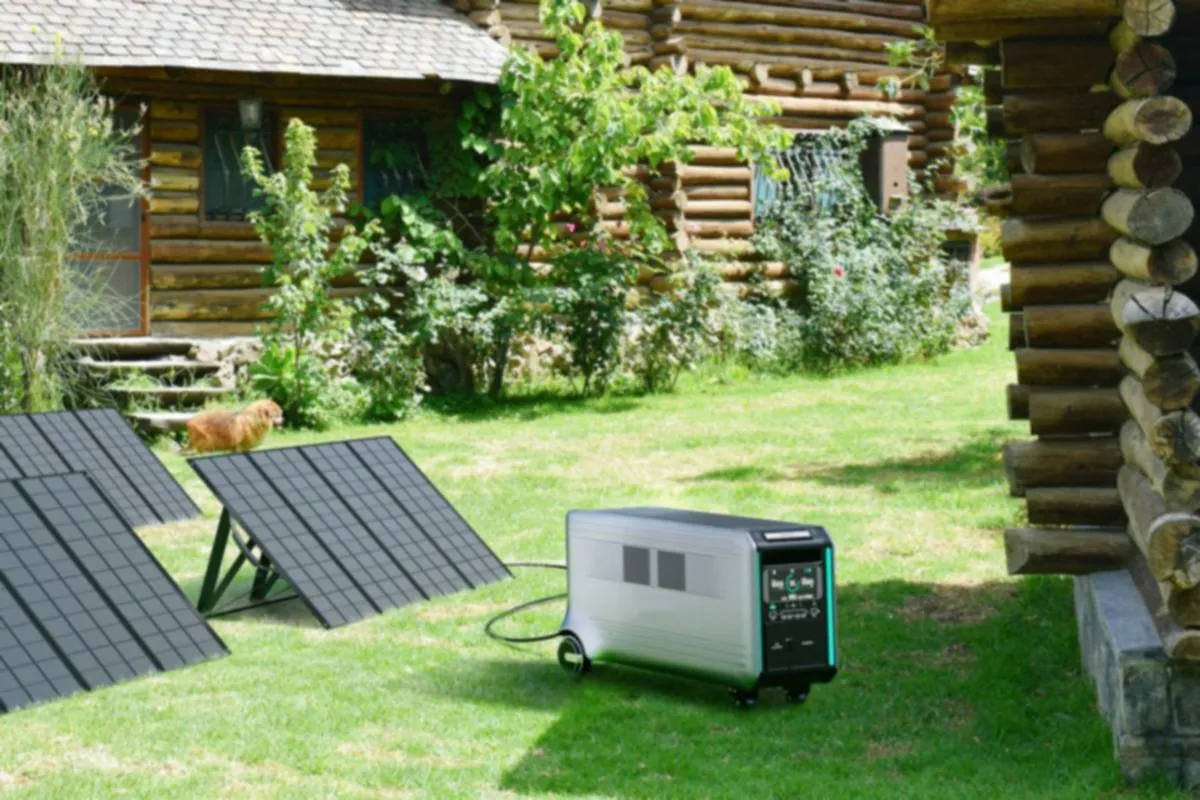
Anker SOLIX C1000 Gen 2
- 1,024Wh LiFePO4 battery
- 2,000W output (3,000W peak)
- Up to 600W solar input
Best for: Road trips and remote cabins where you want to run a laptop, fridge or kettle off solar
Check priceThe Anker SOLIX C1000 Gen 2 is the pick if you're staying somewhere remote for a week and want to work, cook and charge away from the mains. Its 1,024Wh LiFePO4 battery delivers 2,000W continuously and 3,000W at peak, and Anker says you can plug in up to 10 devices at once.
On the solar side, it accepts up to 600W (60V max). Anker quotes a full solar recharge in about 1.8 hours at that input. On mains power, its HyperFlash mode refills it to 100% in about 49 minutes when turned on in the Anker app. Anker rates the battery at at least 80% capacity after 4,000 cycles, and the under-10 ms UPS switchover keeps a laptop or router running if the host's power drops. It can also charge from the grid and solar at the same time, with solar used first.
What we like
- Enough capacity for a full day of remote work plus small appliances
- High solar input for fast top-ups on sunny days
- Fast UPS switchover protects your work during outages
What to consider
- At about 11.3 kg (24.9 lb), it's a car-boot item, not something to carry far
- You'll need a separate solar panel, sold on its own or in a bundle
Who it's for: road-trippers and long-stay remote workers in cabins, farm stays and rural rentals.
See the Anker SOLIX C1000 Gen 2
Anker SOLIX C300 DC: the most portable
Anker SOLIX C300 DC
- 288Wh LiFePO4 battery
- 300W output
- Two 140W two-way USB-C ports
Best for: Remote workers who mainly need to keep laptops, phones and lights charged
Check priceThe Anker SOLIX C300 DC is built around USB-C rather than wall sockets. Its 288Wh LiFePO4 battery delivers 300W in total, and two of its USB-C ports are 140W two-way ports, so you can charge the station from a laptop charger and fast-charge a laptop from it.
For solar, it takes up to 100W via an XT60 connector. Anker recommends its 60W or 100W panels in the 11–28V range. Anker says it reaches 80% in about an hour using both 140W USB-C inputs. It weighs about 2.8 kg, so it's easy to move from the car to a desk or balcony.
What we like
- Small and light enough to carry around a rental
- Two high-power USB-C ports for laptops
- Recharges from solar, car or USB-C
What to consider
- No AC sockets, so it can't run devices with a standard plug
- Lower solar input than the C1000 Gen 2
Who it's for: laptop-first remote workers who need reliable USB-C power at home-stays with patchy electricity.
EcoFlow RIVER 3: the best small AC unit
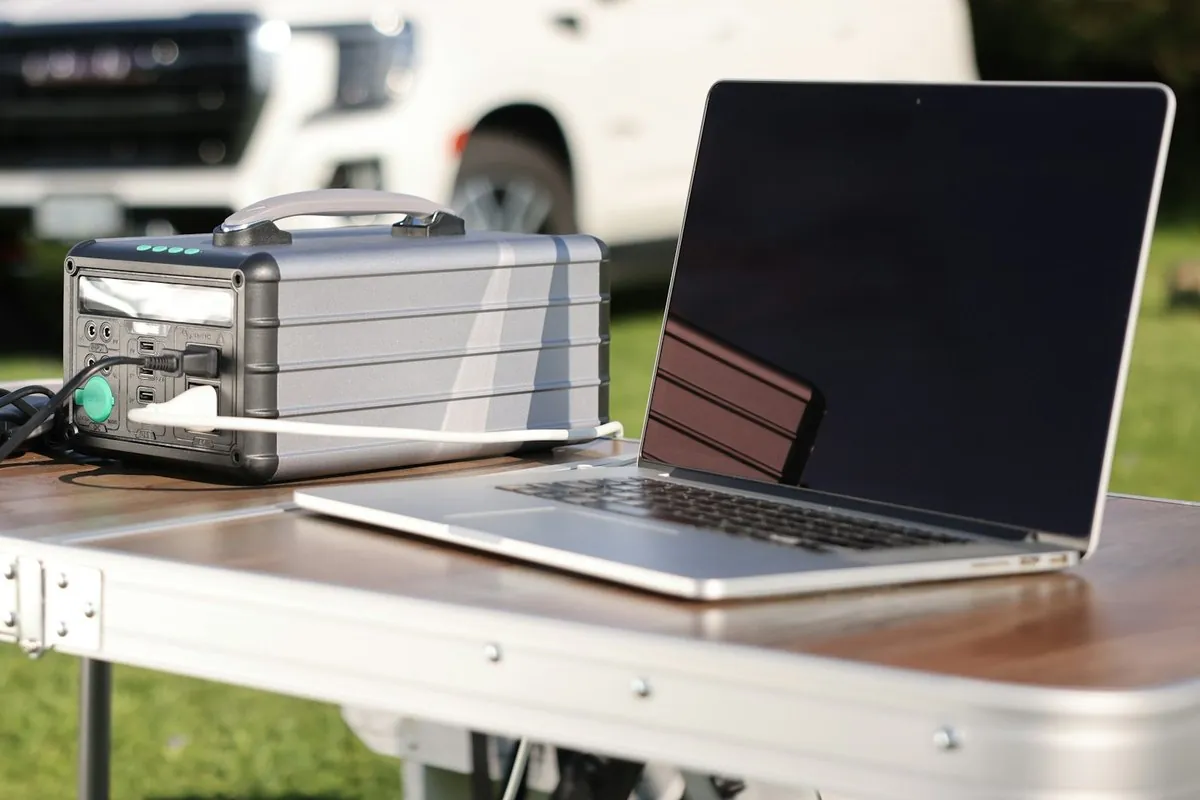
EcoFlow RIVER 3
- 245Wh LiFePO4 battery
- 300W AC output
- Up to 110W solar input
Best for: Short stays where you want standard wall sockets in a compact box
Check priceIf you want ordinary wall sockets in a compact box, the EcoFlow RIVER 3 is worth a look. It has a 245Wh LiFePO4 battery and 300W of AC output, plus up to 110W of solar input, and it weighs about 3.55 kg.
EcoFlow lists a UPS switchover under 20 ms, which helps keep a router or monitor running through a brief power cut. Its capacity is a little lower than the C300 DC's, but you get AC sockets for chargers, fans and small lamps.
What we like
- AC sockets in a compact, carry-around size
- Solar input above 100W
- UPS mode for short outages
What to consider
- Smallest capacity here, so it suits shorter stays
- Slower UPS switchover than the C1000 Gen 2
Who it's for: weekend cabin guests and road-trippers who want plug-in power without the bulk.
How to choose a power station for rental stays

- Watt-hours (Wh) = how long. Add up the battery sizes of what you'll charge each day. A 250–300Wh unit covers a few laptop and phone charges; around 1,000Wh adds small appliances and multi-day use.
- Watts (W) = what it can run. Check the power rating of any appliance. A 300W unit can't run a kettle; the C1000 Gen 2's 2,000W covers far more.
- AC or USB-C? If everything you carry charges over USB-C, the C300 DC is lighter. For plugs, pick an AC model.
- Solar input. Higher solar input means faster top-ups. Match your panel's voltage and connector to the station's spec.
- Weight. Anything around 11 kg stays near the car. Under 4 kg moves easily around a house.
- UPS. If you work online, a fast UPS switchover keeps your router and laptop running through short cuts.
Remote stays often come with patchy Wi-Fi too. A travel router and phone data from a travel eSIM such as Airalo (compare options in our best travel eSIM guide) help you stay online. For longer trips, SafetyWing is one of the plans in our travel insurance guide. For smaller daily charging, see our travel power strip guide and solar charger guide.
Our verdict
For most Airbnb and cabin travellers who drive to their stay, the Anker SOLIX C1000 Gen 2 is our pick. Its 1,024Wh battery, 2,000W output, 600W solar input and under-10 ms UPS cover a full remote workday and more. If you mainly charge laptops and phones and want something light, go for the Anker SOLIX C300 DC. For AC sockets in a small box, choose the EcoFlow RIVER 3.
Check prices: Anker SOLIX C1000 Gen 2
FAQ
Can I take a portable power station on a plane?
Generally not. These batteries are well above the limits airlines usually allow in the cabin, so treat them as road-trip gear. Our power bank flying guide explains the usual rules.
Do I need a solar panel?
No. All three charge from the mains, and the Anker C300 DC also charges over USB-C. A panel lets you top up off-grid. Check the station's maximum solar input, voltage range and connector first.
What is LiFePO4 and why does it matter?
LiFePO4 (lithium iron phosphate) is a battery chemistry built for many charge cycles. Anker, for example, rates the C1000 Gen 2 at 80% capacity or more after 4,000 cycles.
Will it run a hairdryer or kettle?
Only the C1000 Gen 2 (2,000W continuous) has the output for many high-power appliances. Check the appliance's wattage against the station's rating before you plug in.

 Eco Gadgets

